

Key Takeaways
- Novikov Restaurant & Bar appears in the Michelin Guide as a recommended Mayfair restaurant but does not currently hold a Michelin star.
- It operates two distinct dining concepts — pan-Asian and Italian — across a 10,000 sq ft space at 50a Berkeley Street, W1J 8HA.
- Main courses range from £28 to £85 depending on the restaurant and dish.
- Novikov is not halal-certified; Muslim travellers must contact the restaurant directly before visiting to discuss dietary requirements.
- Reservations are strongly recommended, especially Thursday through Saturday evenings.
Mayfair's most glamorous dining room has long divided opinion — is Novikov Restaurant & Bar a Michelin-worthy institution or simply London's most spectacular scene? For Arab and Gulf travellers who expect both culinary excellence and a certain theatre at the table, the answer matters enormously. Novikov occupies a sprawling 10,000 sq ft space on Berkeley Street, W1, housing an Italian restaurant, an Asian restaurant, and a buzzing lounge bar under one gilded roof. With the Michelin Guide scrutinising London's dining scene more closely than ever, we break down exactly where Novikov stands, what it delivers on the plate, and whether it deserves a place on your London itinerary.
Novikov and the Michelin Guide: What the Listing Actually Means
When discussing Novikov Restaurant & Bar's Michelin credentials, precision matters. Novikov does not currently hold a Michelin star, but its inclusion in the Michelin Guide as a recommended restaurant is still a meaningful endorsement. According to the Michelin Guide's own criteria, a recommendation signals consistent quality, skilled cooking, and a dining experience worth seeking out — even without the coveted star designation. For context, only around 200 London restaurants appear in the Guide at all, making any listing a genuine mark of distinction in a city that boasts thousands of dining establishments.
The Michelin Guide's inspectors are notoriously exacting. A recommended listing — sometimes denoted by the Bib Gourmand or simply a Guide entry — reflects repeated visits, anonymous assessment, and a judgement that the kitchen delivers reliably at its price point. For Novikov, which pitches itself firmly at the luxury end of the market, that consistency across two entirely different culinary concepts is no small achievement. Many London restaurants struggle to maintain standards in a single kitchen; Novikov does it across two.
It is also worth noting that Michelin recognition, at any level, carries weight with a discerning international clientele. Arab and Gulf visitors who travel frequently between London, Paris, Dubai, and beyond are well-acquainted with the Michelin system. A Guide listing at Novikov signals that this is not merely a celebrity haunt or a venue riding on interior design alone — there is genuine culinary ambition behind the spectacle.
What separates a Michelin-recommended restaurant from its unrecognised peers is a commitment to the fundamentals: sourcing, technique, and consistency. At Novikov, the Asian kitchen sources its fish from trusted Billingsgate suppliers and ages its beef in-house, while the Italian side imports key ingredients — from San Marzano tomatoes to aged Parmigiano Reggiano — directly from artisan producers in Italy. These are not details that appear on the menu, but they are precisely the kind of details that Michelin inspectors notice and reward. For the well-travelled diner who has eaten at starred restaurants across Europe and the Gulf, the quality is immediately legible on the plate.
It is also worth understanding that the Michelin Guide's London edition is updated annually, and a restaurant's status can evolve. Novikov's sustained presence in the Guide across multiple editions speaks to a kitchen that has not rested on its reputation. In a Mayfair neighbourhood populated by some of the world's most competitive dining rooms — including several multi-starred establishments within a short walk — simply retaining a Guide listing year after year requires constant vigilance and genuine culinary discipline.
First Impressions: The Space and the Atmosphere
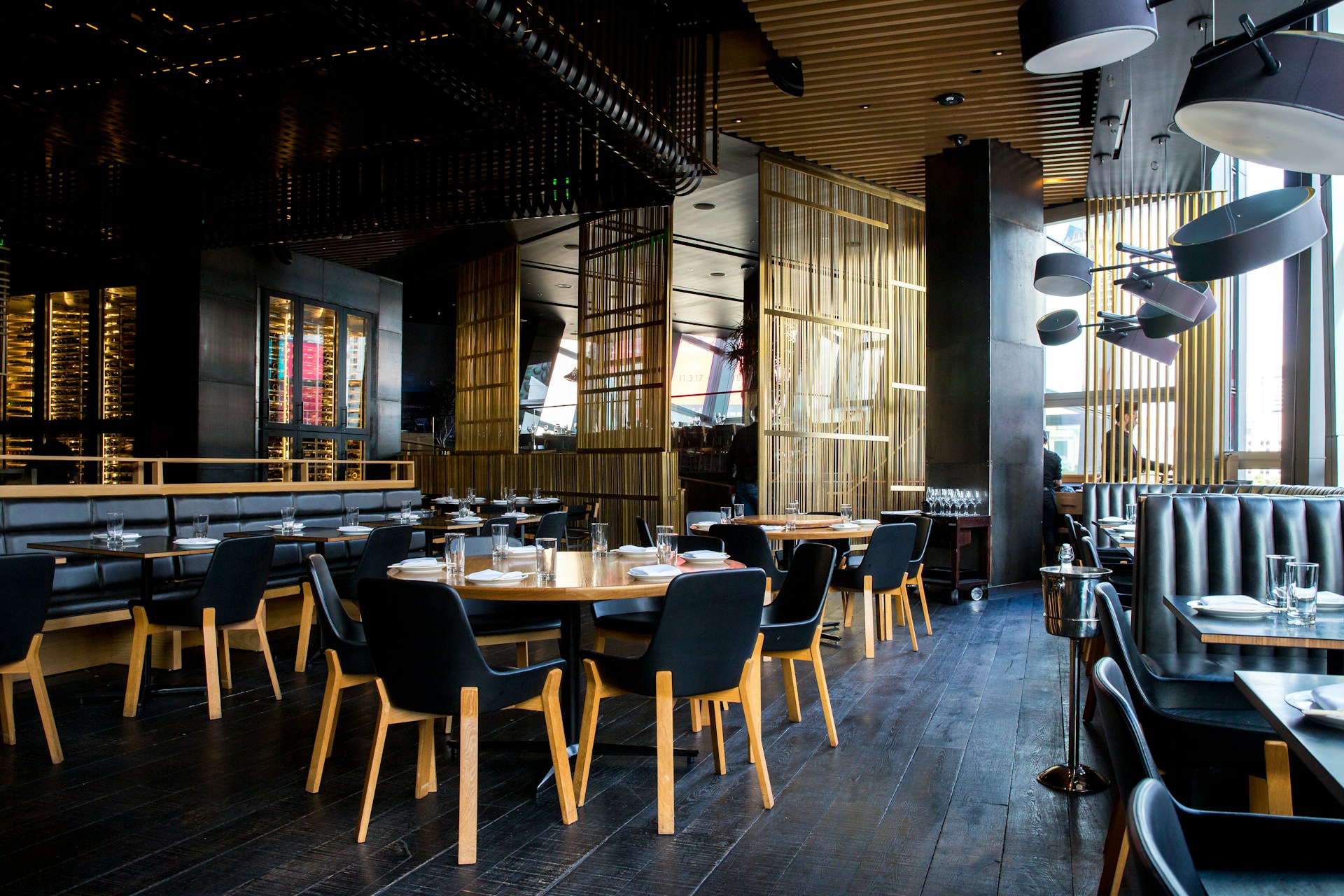
On our last visit to Novikov Mayfair, what struck us immediately was the sheer scale and confidence of the space. The Asian restaurant side is draped in lush tropical greenery, with low amber lighting casting a warm glow across lacquered surfaces. You can hear the gentle percussion of a live DJ set filtering through from the lounge, yet the dining room itself maintains an atmosphere of hushed exclusivity. The scent of lemongrass and charcoal from the robata grill is the first sensory signal that this kitchen takes its craft seriously.
The Italian side of the restaurant presents an entirely different mood. Warmer tones, softer lighting, and a more intimate layout create the sense of a private dining club rather than a grand brasserie. The two spaces share an address but feel like entirely separate restaurants — a deliberate design choice that allows Novikov to serve very different moods and occasions within a single visit or across multiple evenings.
Arriving at Novikov on a Thursday evening, the pavement outside Berkeley Street already hums with the quiet energy of a venue at full tilt. A discreet door team manages the entrance with practiced efficiency — no velvet rope theatre, simply a calm confirmation of your reservation and a smooth handoff to the maître d' inside. The cloakroom attendant takes your coat with a smile, and within thirty seconds of entering you are seated, handed a menu, and offered still or sparkling water. It is a choreography that many far more celebrated restaurants fail to execute with this level of ease, and it sets the tone for an evening in which the staff anticipate rather than react.
The lounge bar, which sits between the two dining rooms, deserves its own mention. Upholstered in deep jewel tones with a ceiling that seems to absorb sound rather than reflect it, the bar is an ideal place to begin an evening with a cocktail before your table is ready — or to extend it long after dessert. The bar team produces technically accomplished drinks, from a precisely balanced Negroni to a yuzu-inflected sour that bridges the gap between the Italian and Asian menus. For Gulf travellers who do not drink alcohol, a thoughtful selection of non-alcoholic alternatives is available on request, though the mocktail menu is not as prominently displayed as it might be.
The Asian Menu: Robata, Sashimi, and the Art of Restraint
The Asian restaurant at Novikov draws on a broad pan-Asian palette — Japanese robata grilling, Chinese dim sum traditions, and South-East Asian aromatics — without descending into the kind of unfocused fusion that blurs every flavour into sameness. The robata grill is the centrepiece, and dishes from it arrive with the clean, smoky intensity that only live-fire cooking can produce. Black cod with yuzu miso, priced at around £38, is the dish most frequently cited by regulars, and with good reason: the lacquer is glossy and deeply caramelised, the flesh yielding without any trace of the mushiness that afflicts lesser versions of this now-ubiquitous preparation.
Sashimi platters are composed with an eye for visual elegance as much as flavour, the fish sliced to a thickness that speaks of genuine knife skill. Wagyu beef tataki, finished with truffle oil and a scattering of micro herbs, sits at the premium end of the menu at around £55, but the quality of the beef justifies the price point. For those dining in a group — as many Gulf visitors do — the sharing format of the Asian menu is particularly well-suited, allowing a table to range widely across the kitchen's strengths in a single sitting. Budget approximately £90 to £120 per person on the Asian side, inclusive of starters, a main, and sides, before beverages.
The Italian Menu: Classical Foundations, Mayfair Ambition
The Italian restaurant at Novikov occupies a more classical register than its Asian counterpart, but classical does not mean conservative. The pasta is made in-house daily, and the difference is immediately apparent in the texture of a tagliolini with white truffle — silken, with just enough resistance to carry the earthy weight of the truffle shaved generously at the table. Main courses lean toward the grand: a whole

